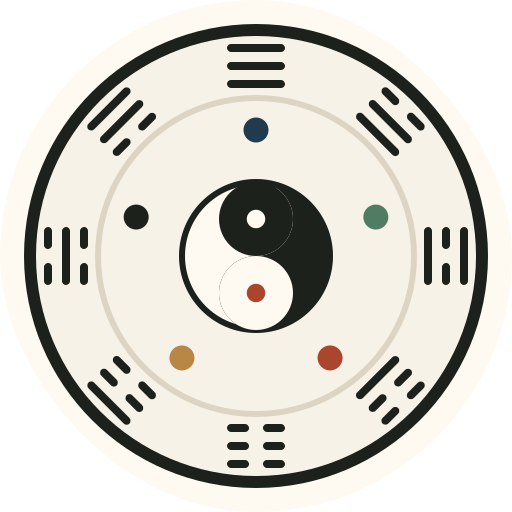
The Five Elements are movements, not boxes
A beginner often searches for one element as a personality label. That can be a useful doorway, but it is too small. In Wu Xing thought, the elements are better understood as phases or movements: ways life grows, opens, stabilizes, clarifies, stores, returns, and changes again.
Wood means growth and direction
Wood is spring movement: beginning, planning, renewal, flexible strength, and the need for direction. Balanced Wood can start without forcing the whole future at once. Strained Wood may show up as impatience, pressure, or frustration when growth has no space.
Fire means warmth and expression
Fire is summer movement: brightness, joy, visibility, communication, warmth, and connection. Balanced Fire has rhythm and a place to return. Strained Fire can become scattered, performative, restless, or burned out when expression never closes.
Earth means center and support
Earth is the movement of center, care, nourishment, steadiness, and transition. Balanced Earth makes life feel held without making it heavy. Strained Earth can become worry, over-responsibility, or the habit of carrying what is not actually yours.
Metal means refinement and boundaries
Metal is autumn movement: structure, discernment, standards, clean boundaries, and release. Balanced Metal protects what matters without becoming cold. Strained Metal may become rigid, harsh, perfectionistic, or too quick to cut before listening.
Water means depth and adaptation
Water is winter movement: depth, listening, rest, stored strength, memory, and adaptability. Balanced Water can wait without disappearing and move around obstacles without losing direction. Strained Water may become fear, avoidance, or endless overthinking.
How the five movements relate
The elements are most useful when read together. Wood needs enough Water to renew and enough Metal to keep direction clean. Fire needs Wood as fuel and Water as rhythm. Earth supports transition, while Metal and Water help release and return. A strong element is not automatically good, and a quiet element is not a flaw.
How to use this without making it fate
Use the Five Elements as questions, not verdicts. Ask what movement is too loud, what movement is missing, and what small practice would restore balance. Then continue into the individual Wood, Fire, Earth, Metal, or Water guide if one movement feels especially relevant.