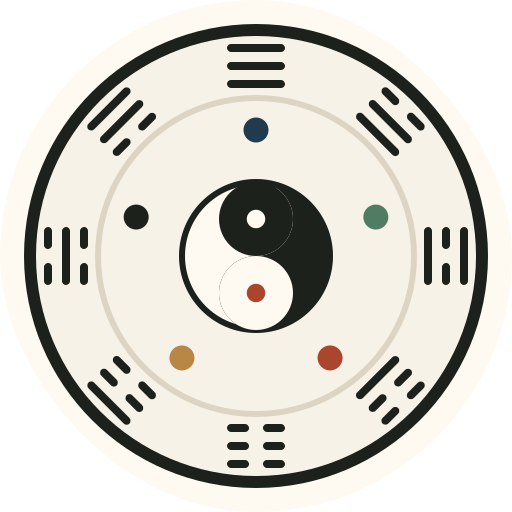
Dao before tactics
The project begins with Dao as the root language: pattern, timing, balance, non-forcing, and the way ordinary life changes when attention becomes quieter.
Eastern Elements is a quiet home for Daoist and classical Chinese wisdom, built for readers who want pattern language, daily balance, and practical self-reflection without superstition, pressure, or fixed-destiny promises.
The site begins with Dao, then branches into a free Five Elements reading, Tao Te Ching study, Yi Ching reflection, source-based guides, and small daily practices. The tone is deliberately careful: useful enough for modern life, modest enough to keep the tradition respected.
Position
A clear boundary is part of the design. It helps the tradition stay respected and helps readers use the material without outsourcing their decisions to a chart, symbol, or product.
The project begins with Dao as the root language: pattern, timing, balance, non-forcing, and the way ordinary life changes when attention becomes quieter.
Tao Te Ching, Yi Ching, Yin-Yang, Five Elements, seasonal rhythm, and cultivation ideas are rewritten as practical reflection for modern Western readers.
Readings and future products are educational prompts. They do not promise luck, wealth, healing, protection, or predetermined life outcomes.
Independent publishing
Eastern Elements is being built as a long-term independent cultural brand. The commercial path should grow from trust: first make the site worth returning to, then publish deeper materials when reader interest is visible.
The first job is to make the site useful before asking for payment: a clear Five Elements reading, source-based Library pages, and practical guides.
The Tao Te Ching material is being shaped into an independent digital edition with translation notes, modern reflections, and small practices.
Paid products should grow from real reader interest: deeper reports, practice audio, and cultural goods that support the same Dao-rooted path.
The site should feel valuable as a free public project first. Commerce can come later, but it must stay secondary to learning and practice.
The work is not to make ancient systems feel mysterious. The work is to make them usable, careful, and alive in ordinary days.
The free Five Elements reading gives visitors a first pattern language for noticing natural strengths, missing movements, and possible balance themes.
The Library keeps the reading rooted in texts and systems: Tao Te Ching, Yi Ching, Yin-Yang, Five Elements, seasonal rhythm, and Daoist cultivation.
A good insight should become a quiet action: one breath, one journal prompt, one adjustment in timing, one way to use less force.
Reports, ebooks, audio, and symbolic objects should support learning and daily rhythm. They should not become the center of the tradition.
Reader path
About pages should not end in abstraction. Use this map to move from project trust into the part of the site that matches your current need: orientation, reading, source text, or method.
A simple orientation path from Dao to the free reading and Library.
Personal mirrorUse birth date pattern language as a first reflective entry point.
Source textFollow the Mawangdui-oriented source-text and future ebook path.
Trust layerReview the public source map and editorial boundaries behind the site.
Trust checks
Eastern Elements is not trying to make classical Chinese wisdom look exotic. The editorial discipline is simple: name the root, translate carefully, keep boundaries visible, and return each idea to practice.
Library pages point back to Daoist vocabulary, Tao Te Ching context, Yi Ching imagery, Five Elements language, and visible source notes where appropriate.
The goal is to make classical ideas understandable to modern readers while preserving uncertainty, nuance, and the limits of translation.
The site avoids promises of luck, wealth, healing, protection, fixed destiny, or one-size-fits-all instructions.
A useful page should leave the reader with a modest reflection or practice, not only a concept to collect.
Eastern Elements is an independent Dao-rooted wisdom project. It offers a free Five Elements reading, source-based Library pages, Tao Te Ching and Yi Ching reflection, and practical guides for modern life.
No. The site uses classical Chinese pattern language for reflection, timing, and daily practice. It does not claim to predict a fixed future or replace personal judgment.
Dao is the root because it keeps the project focused on pattern, timing, natural movement, restraint, and balance rather than isolated tips or exotic decoration.
Probably, but not before the free site is useful. The likely first independent publication is a Mawangdui-oriented Tao Te Ching ebook, followed by deeper reports or practice resources if reader interest is real.
Use it for cultural learning, journaling, and self-reflection. Do not use it as medical, legal, financial, psychological, or high-stakes decision advice.
Eastern Elements readings, guides, products, and future ebooks are for cultural learning and personal reflection. They should not be used to diagnose a condition, predict a guaranteed outcome, make high-stakes decisions, or replace qualified professional support.