A Twelve-Year Cycle
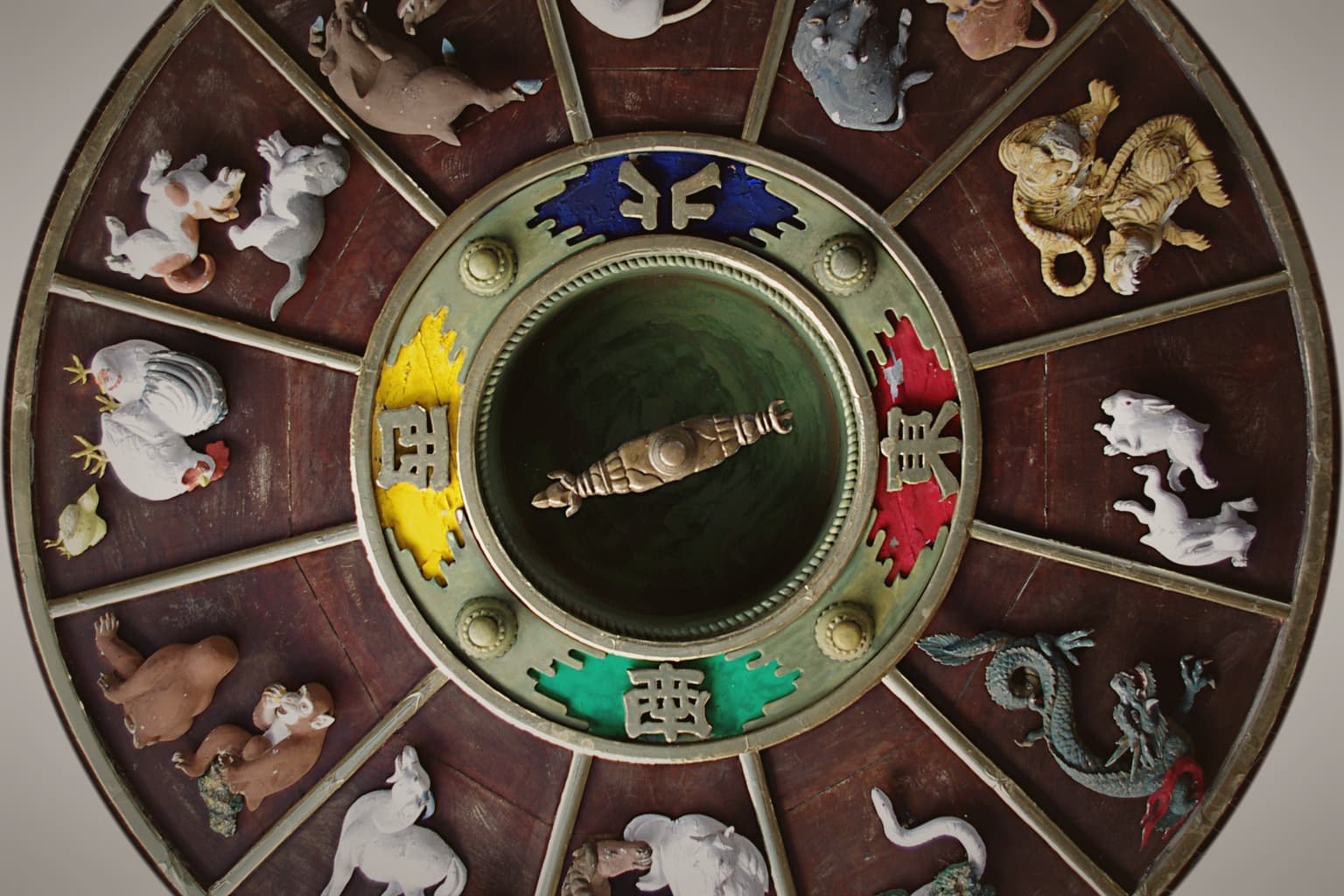
The zodiac, or shengxiao, connects twelve animals with a repeating twelve-year cycle: Rat, Ox, Tiger, Rabbit, Dragon, Snake, Horse, Goat, Monkey, Rooster, Dog, and Pig.
The animal names are memorable, but they sit inside a larger calendar system that also includes the Heavenly Stems, Earthly Branches, Yin-Yang, Five Elements, months, hours, and seasonal timing.
The Great Race Story
Many people first learn the zodiac through the story of a heavenly race. The animals arrive in a particular order, each showing a different kind of intelligence, courage, steadiness, cleverness, cooperation, or timing.
Like many cultural stories, the tale is not only about ranking. It gives each animal a personality image and turns an abstract cycle into something children and adults can remember.
Animals As Images
The Rat often suggests quickness and resourcefulness. The Ox suggests patience and steady work. The Tiger suggests courage. The Rabbit suggests sensitivity and peace. The Dragon carries charisma and cultural grandeur.
The Snake suggests subtlety, the Horse movement, the Goat gentleness, the Monkey cleverness, the Rooster precision, the Dog loyalty, and the Pig ease or generosity. These are images for reflection, not cages for identity.
Beyond Birth-Year Personality
In popular culture, the zodiac is often reduced to birth-year personality. That can be fun, but it is only a surface doorway. Traditional time systems are more layered, especially when the twelve branches interact with elements, seasons, months, days, and hours.
For this site, the healthier question is not "What animal am I forever?" The better question is: what quality does this symbol invite me to notice, cultivate, or balance?
Modern Cultural Use
The zodiac is useful for seasonal content, Lunar New Year education, family-friendly cultural learning, and gentle self-reflection. It can also help international readers enter more complex ideas like BaZi without immediately facing technical charts.
The key is modesty. We can honor the symbolism without promising compatibility, wealth, or a fixed fate.
Everyday example
Someone born in a Dragon year may enjoy the image of confidence and visibility, but a responsible reading would not stop there. It might ask when boldness helps and when it needs humility, patience, or listening.
Someone drawn to the Ox image might reflect on endurance and responsibility, while also asking whether steadiness has turned into overwork. The animal becomes a mirror, not a verdict.
Terms to keep close
Shengxiao
The Chinese zodiac animal cycle associated with twelve repeating years.
Earthly Branches
The twelve time markers behind the animals, used in calendars and classical systems.
Animal image
A symbolic personality or movement quality attached to each animal.
Cycle
A repeating rhythm that helps cultures remember time through story and symbol.
Reflection, not fate
The animal can suggest a quality to notice without defining a person completely.
Historical notes
The zodiac animals are associated with the twelve Earthly Branches, a timekeeping system used for years, months, days, and hours.
Animal stories made the cycle easier to remember and helped families pass symbolic meanings across generations.
Outside China, the zodiac is often the first Chinese symbolic system many people encounter, especially around Lunar New Year.